
 Most people experience occasional stomach problems. Usually, these issues are temporary, caused by a minor infection or something you ate, and discomfort is short-lived. But for those living with inflammatory bowel disease (IBD), the painful flare-ups and chronic symptoms can be a life-long struggle. Crohn’s and Ulcerative Colitis (UC) are the two primary forms of IBD, affecting millions of people worldwide. These conditions can disrupt every aspect of a person’s life, from daily routines to long-term health.
Understanding these complex digestive diseases is the first step toward managing them effectively. While there is no cure for IBD, advancements in medical treatment have transformed the landscape of care. Infusion therapy has emerged as a powerful tool, offering hope and a new standard of living for countless patients. This guide will explore the symptoms, history, and lifestyle impact of Crohn’s and Ulcerative Colitis, and detail how infusion treatments are helping patients achieve and maintain long-term remission.
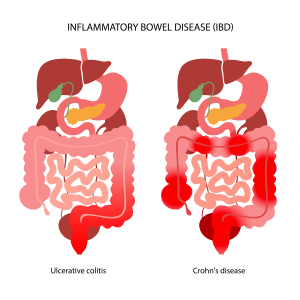 Crohn’s disease and Ulcerative Colitis are chronic inflammatory conditions of the gastrointestinal (GI) tract, but they affect it in different ways. Both are characterized by an abnormal immune response where the body mistakenly attacks its own digestive tissue, leading to inflammation, ulceration, and a wide range of debilitating symptoms.
Ulcerative Colitis (UC) specifically affects the large intestine (the colon) and the rectum. The inflammation is continuous and confined to the innermost lining of the intestinal wall. It almost always begins in the rectum and can spread upward to involve the entire colon. Depending on the extent of the inflammation, it is classified into different types, such as ulcerative proctitis (rectum only), left-sided colitis, or pancolitis (the entire colon).
Crohn’s Disease, on the other hand, can affect any part of the GI tract, from the mouth to the anus. Unlike the continuous inflammation seen in UC, Crohn’s disease is characterized by “skip lesions,” meaning there are patches of inflamed tissue interspersed with healthy tissue. The inflammation in Crohn’s disease is also transmural, meaning it can penetrate the full thickness of the bowel wall. This can lead to more complex complications, including strictures (narrowing of the intestine), fistulas (abnormal tunnels between organs or to the skin), and abscesses.
Common Symptoms and Diagnosis
While their patterns of inflammation differ, Crohn’s and colitis share many overlapping symptoms, which can vary in severity and fluctuate between periods of active disease (flare-ups) and remission.
Common symptoms include:
• Persistent diarrhea, which may contain blood, pus, or mucus
• Urgent and frequent need to have a bowel movement
• Abdominal pain and cramping
• Rectal bleeding
• Unexplained weight loss
• Fatigue and low energy
• Reduced appetite
• Fever
Because the inflammation in Crohn’s disease can be more widespread and deeper, it can also lead to other complications like mouth sores, anal fissures, and perianal abscesses. Furthermore, IBD is a systemic disease, meaning it can cause symptoms outside of the GI tract. These are known as extraintestinal manifestations and can include joint pain (arthritis), skin rashes, eye inflammation (uveitis), and liver disorders.
Diagnosing IBD involves a comprehensive evaluation. A gastroenterologist will typically start with a physical exam and a detailed review of your medical and family history. Diagnostic tests are essential to confirm the diagnosis and distinguish between Crohn’s and colitis. These may include:
• Blood tests: To check for anemia, inflammation markers (like C-reactive protein), and nutritional deficiencies.
• Stool samples: To rule out infections that could cause similar symptoms.
• Endoscopy: A colonoscopy is the gold standard for diagnosing IBD. It involves using a thin, flexible tube with a camera to view the entire colon and the end of the small intestine. A doctor can identify inflammation, ulcers, and take tissue samples (biopsies) for analysis. An upper endoscopy may be used to examine the upper GI tract if Crohn’s is suspected there.
• Imaging studies: CT scans or MRI scans can provide detailed images of the small and large intestines, helping to identify the location and extent of inflammation and check for complications like strictures or fistulas.
 The Impact of IBD on Everyday Lifestyle
Living with Crohn’s or Ulcerative Colitis is more than just managing physical symptoms. The unpredictable nature of these diseases can have a profound impact on a person’s mental health, social life, and professional career. The constant need to be near a restroom, a phenomenon often referred to as “scoping,” can lead to social isolation and anxiety.
Social and Emotional Well-being: Many individuals with IBD report feeling anxious or depressed. The fear of having a sudden flare-up in public can make it difficult to attend social gatherings, travel, or even run simple errands. Explaining the condition to friends, family, or colleagues can be challenging, as the symptoms are often invisible to others. The chronic pain and fatigue associated with IBD can also take a significant emotional toll, leading to feelings of frustration and helplessness.
Work and School: Frequent absences due to symptoms or doctor appointments can interfere with work and school performance. The fatigue that accompanies active disease can make it difficult to concentrate and stay productive. Many patients must carefully plan their daily commute and work environment to ensure they have ready access to a restroom. Choosing a career or educational path may be influenced by the flexibility required to manage the condition.
Diet and Nutrition: Food does not cause IBD, but it can trigger or worsen symptoms during a flare-up. Many patients find they must follow a restricted diet, avoiding foods like raw vegetables, dairy, spicy foods, and high-fiber items. This can make dining out or eating at social events stressful. Moreover, inflammation can impair the body’s ability to absorb nutrients, leading to malnutrition, anemia, and weight loss, which further contributes to fatigue.
Intimacy and Relationships: The physical discomfort, pain, and body image issues associated with IBD can affect intimacy. Symptoms like abdominal pain, fatigue, and the potential for a stoma after surgery can impact self-confidence and relationships. Open communication with a partner is crucial but can be difficult.
The constant cycle of flare-ups and remission creates a life of uncertainty. The goal of modern IBD treatment is not just to control symptoms but to restore a sense of normalcy and predictability, allowing patients to reclaim their lives.